Water Shoes For Dunn's River Falls: Do You Need Them
The climb at Dunn's River is done on wet, stepped travertine rock, and the single piece of gear that decides whether it feels easy or nerve-racking is your footwear. Here is what the park says, what actually grips, and how to plan around buying shoes on site.
Short answer
Yes, bring closed-toe water shoes with good grip. The park recommends them for the climb, they are sold at the falls, and the shop lines can be long, so packing your own pair is the smoother plan. Flip flops and slip-ons do not work on wet travertine. Admission is US$25 for adults and US$17 for children aged 4 to 12.
Do You Need Water Shoes For Dunn's River Falls?
Yes. Closed-toe water shoes with good grip are the recommended footwear for the climb, and the park says so directly in its own visitor FAQ. The climb runs 45 minutes to an hour base to top on wet travertine terraces, and bare feet, flip flops and smooth-soled sandals are the fastest way to end up walking the dry path instead. Bring your own pair if you can.
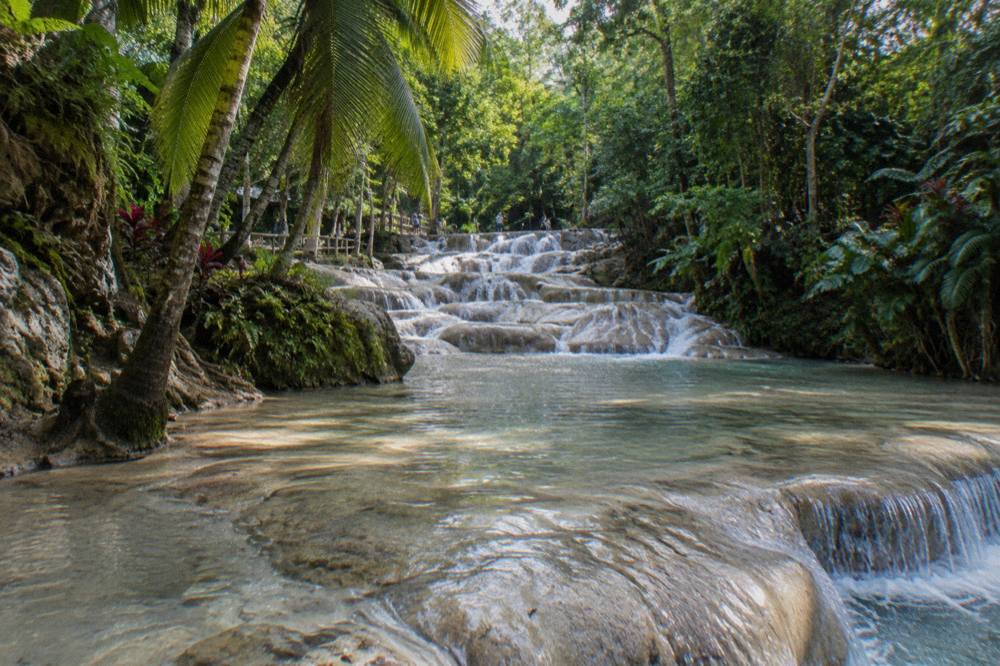
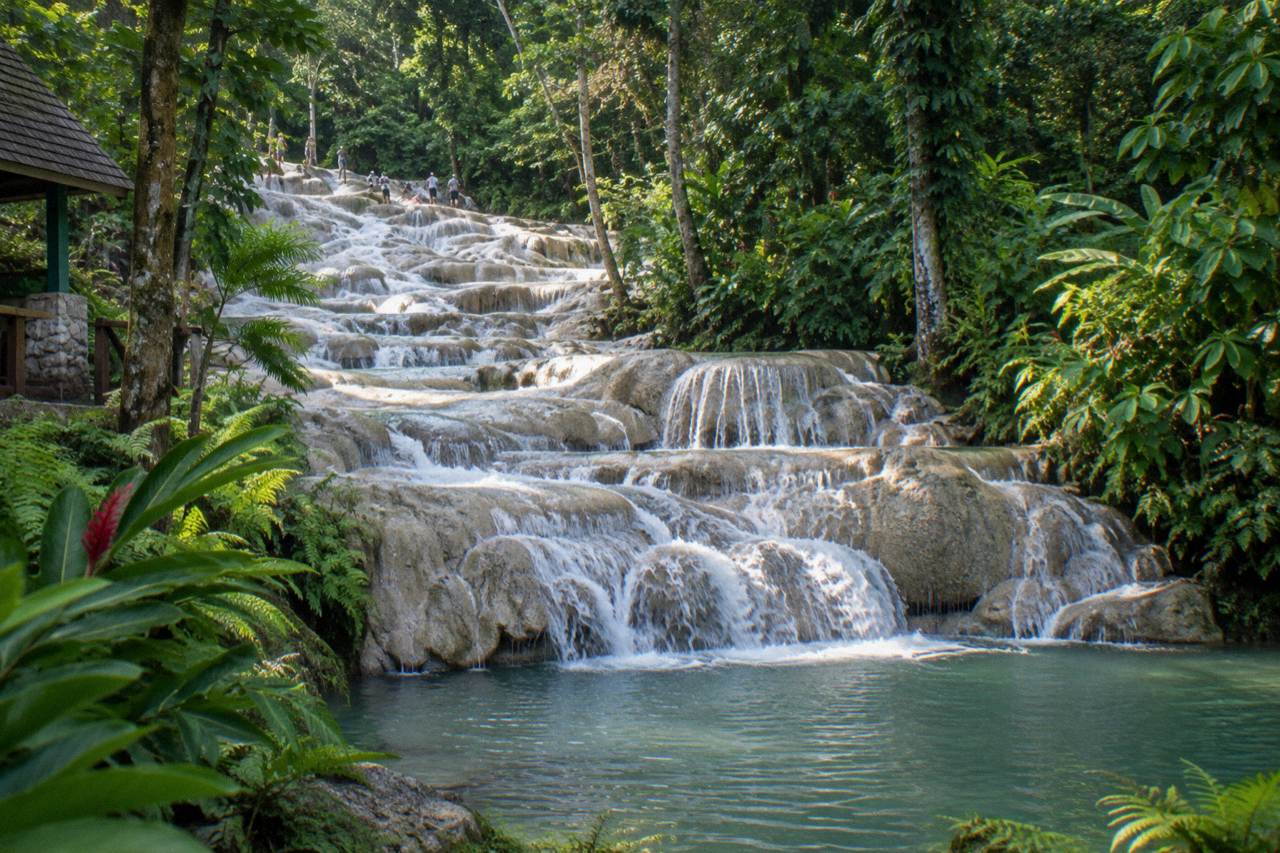
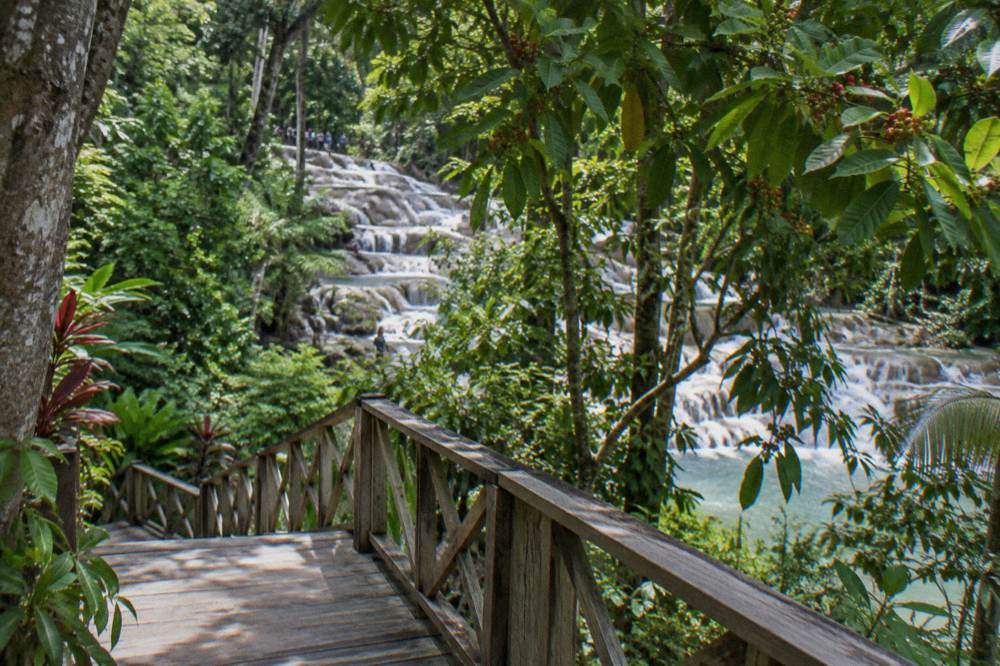
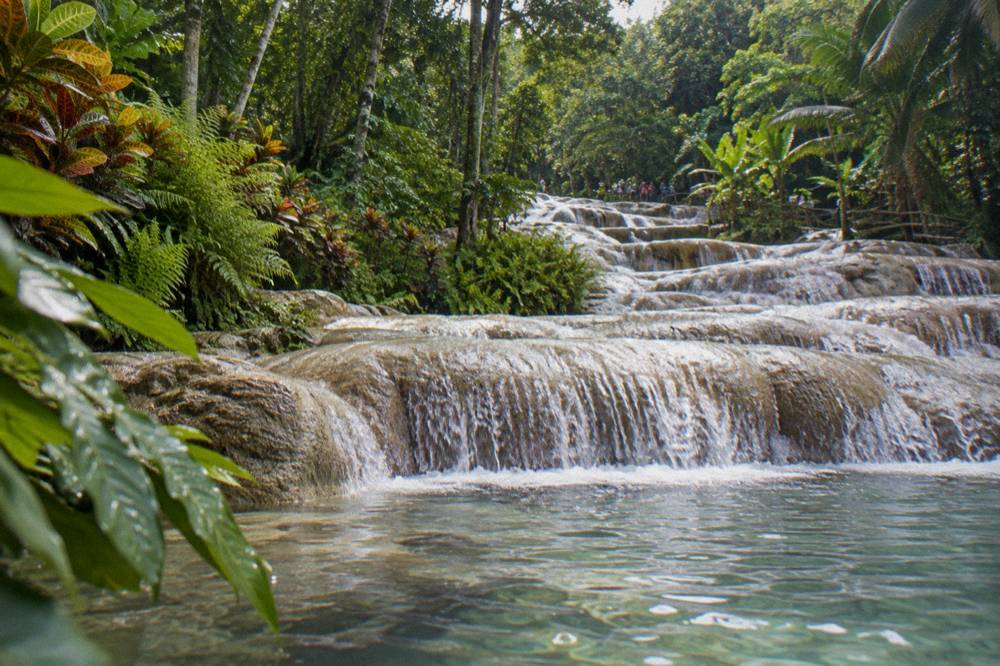
The question sounds trivial until you are standing at the base of the falls watching the guided human chain form. The rock you climb is travertine, a limestone that the water has terraced into natural steps. Some of those steps are grippy and rough, others are worn glassy smooth by decades of feet and constant water. A shoe that holds on the rough patches can slide on the smooth ones, and the difference between a relaxed climb and a white-knuckled one is mostly down to sole rubber and fit.
The park's FAQ is unambiguous about footwear: closed-toe water shoes with good grip are recommended, and they are sold at the falls. It also adds a detail that matters for planning: the lines for the on-site shop can be long, so bring your own if possible. That single sentence is the heart of this guide. Everything else here is about what to buy, how it should fit, and what to do if you arrive without a pair.
Two practical points frame the whole decision. First, the climb takes 45 minutes to an hour, and the average visit from park entrance to exit runs about an hour and a half, so whatever is on your feet is on your feet for a sustained, wet, physical hour, not a quick dash. Second, if you genuinely cannot or do not want to do the wet climb, the park offers a dry walk alongside the falls after paying the entrance fee, and ordinary trainers are fine for that. If your day is built around actually climbing, the shoes are not optional equipment in any practical sense.
Planning the rest of the day's clothing? Our guide to what to wear for the falls covers towels, swimwear and dry clothes, and the step-by-step climbing guide walks through the route itself.
What Kind Of Shoe Actually Grips Wet Travertine?
The shoes that work best share three features: a closed toe, a soft rubber sole with deep tread, and a snug lace or strap that will not loosen in moving water. Think purpose-made water shoes, canyoning shoes, or an old pair of trainers with aggressive tread that you do not mind soaking. What fails, consistently, is anything with a smooth sole, an open toe, or a loose fit.
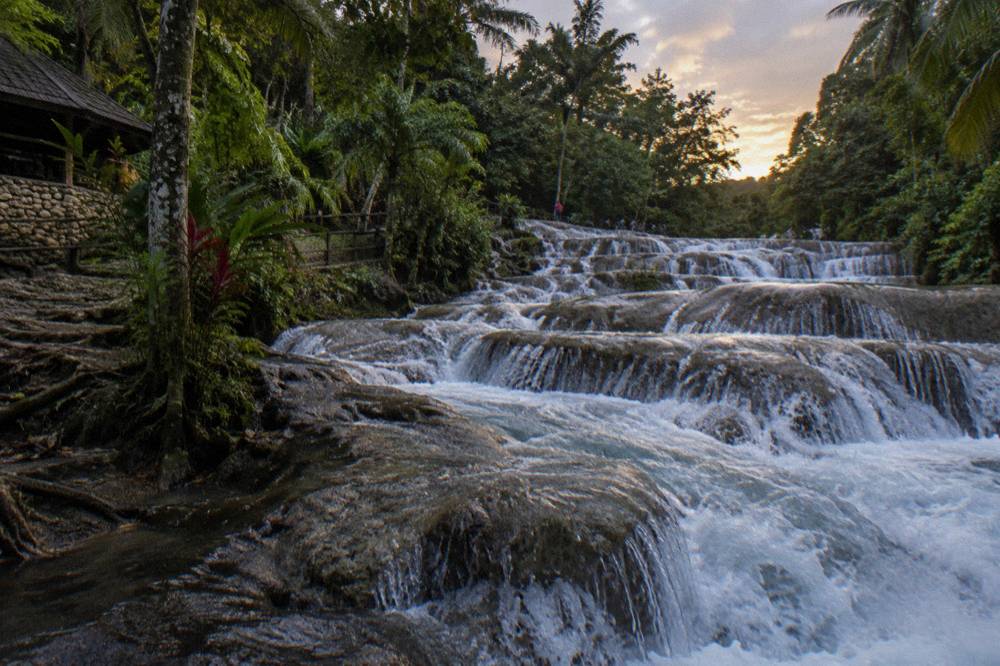
Travertine rewards certain rubber compounds and punishes others. The terraces are wet everywhere the water touches, which is most of the climbing line, and the guide-led chain moves through shallow pools, over lips of rock and down short chutes where you cannot always see your feet. Sole rubber needs to be soft enough to conform to the rock, because hard plastic-like soles skate on wet stone no matter how deep the tread looks. Deep lugs help on the rougher terraces. A closed toe protects against knocking your toes on rock edges, which happens to nearly everyone at least once.
Here is how the common options stack up, based on what the climb demands and what the park itself recommends:
| Footwear | Works for the climb? | Why |
|---|---|---|
| Purpose-made water shoes (closed toe, laced or strapped) | Yes | Soft gripping rubber, drains water, snug fit; the park's own recommendation |
| Old trainers with deep tread | Yes | Grippy and protective; they will get soaked, so use a pair you do not care about |
| Canyoning or wet-shoe approach shoes | Yes | Best grip of all; more than most visitors need |
| Neoprene slip-on water socks | Marginal | Thin protection; smooth soles slide on polished rock |
| Rubber beach sandals with straps | No | Open toe, modest grip, can be pulled off by water flow |
| Flip flops | No | No ankle retention at all; unsafe on wet rock |
| Bare feet | No | Toes are exposed and polished rock is slippery |
One nuance worth knowing before you shop: "water shoes" is a label that covers both proper closed-toe gripping shoes and thin neoprene socks. The cheap sock style is fine for a sandy beach and poor on terraced limestone. If the listing or the shop tag says closed toe and shows a real rubber outsole with tread, it is in the right family. If it is essentially a fabric sock with a printed sole, skip it.

For most visitors the honest answer is that a pair of closed-toe water shoes from home beats anything bought in a hurry on the day. If the climb is the centrepiece of your trip, treat the shoes as part of the ticket price rather than an afterthought.
Can You Buy Water Shoes At The Falls?
Yes. Water shoes are sold at the falls, at the park's own shop, and the visitor FAQ notes that the lines for them can be long. No reliable price is published for the on-site shoes, so ask on arrival rather than budgeting from a guess. Buying there works as a fallback, but arriving with your own pair saves queue time you would rather spend in the water.
The shop detail is the part of the FAQ most first-time visitors skim past and then regret. On a busy morning, particularly a cruise day when the park opens at 7:00 a.m. instead of 8:30, the combination of ticket lines, shoe lines and guided-group formation eats real time. The climb itself takes 45 minutes to an hour, and the average visit runs about an hour and a half from entrance to exit, so twenty minutes in a shoe queue is a meaningful fraction of your morning.
Sizing is the other risk of buying on site. Shop stock runs in common sizes and can thin out late in the day, and a shoe that fits loosely is nearly as bad as no shoe at all once the water starts pushing at your ankles. If you do need to buy at the park, get there early, try both shoes on properly, and tighten every strap before you join a climb group. Prices for shoes, like locker rental prices, are not published in a form we can verify, so the honest guidance is simply to ask at the counter and treat it as a convenience purchase rather than a bargain.
Lockers follow the same pattern: they are available for rent at the falls, with no verified published price, and tour vehicles often let guests leave dry bags and valuables on board instead. If your day at the park is part of a booked excursion, ask the driver or guide about the vehicle before paying for a locker. For the full breakdown of admission and what the entry fee covers, see tickets and entrance fees explained.
How Should Water Shoes Fit For The Climb?
Snug, but not tight. You want the heel locked down, the toes just short of the front of the shoe, and every strap or lace cinched before you step into the first pool. Moving water will find any slack in a shoe, and a loose water shoe that fills and floats off your foot mid-climb is a common mishap on the terraces. Size for your wet foot, not your dry one.
Fit failures on the falls come in two flavours. The first is the loose shoe: water floods in, the shoe floats, and you either lose it or finish the climb clenching your toes. The second is the too-small shoe: wet neoprene and fabric that seemed fine in the shop compress cold, wet toes for a solid hour on the rock. Both are avoided the same way, by sizing up a half size if you are between sizes and relying on laces or straps to take out the slack rather than the shoe's own tightness.
A few fit rules that hold up on wet rock:
- Tighten everything twice, once dry on land and once again after your first immersion, because straps relax when they soak.
- Avoid slip-on styles without a rear strap, however convenient they look; retention matters more than ease.
- If you buy lace-up water shoes, double-knot them; a trailing lace on wet rock is a trip hazard.
- Wear them around your hotel room before the trip to spot rub points while you can still adjust or exchange them.
- Bring a spare pair of dry socks for after; the walk back to the vehicle in soaked shoes is the least glamorous part of the day.
If you are adding other footwear-affecting activities to the day, the same shoes work for most of them. The Blue Hole swim spots and river-tubing runs in the area all reward closed-toe grip and punish flip flops identically, which is one reason the combined tours are such efficient use of one pair of shoes. Several of the combo listings, including the river-focused ones, explicitly list towels, water shoes and swimwear as not included, so the packing job is yours. That fact is on the Dunn's River and river tubing tour page in more detail.
Are Flip Flops, Crocs, Or Bare Feet A Bad Idea?
Yes, all three are a bad idea for the climb. Flip flops have no retention and come off in the first pool. Crocs and similar clogs have smooth, hard soles that slide on polished travertine, and their loose fit makes them a hazard in moving water. Bare feet leave your toes exposed to rock edges and give you far less grip than a soft rubber sole. Any of the three means the dry walk, not the climb.
Crocs deserve a specific word because they are the footwear people most often assume will be fine. On dry land they are comfortable and grippy enough, but on wet limestone their foam sole behaves like a skateboard deck, and the loose heel strap does nothing once the current pushes sideways. Guides see it constantly. The same logic applies to dress sandals, water socks with printed soles, and any shoe you can kick off without using your hands. The test is simple: if you can remove the shoe without unbuckling or untying anything, the water can remove it for you.
Bare feet are a subtler case. Plenty of confident swimmers figure bare skin grips wet rock well, and on some surfaces it does. On the polished sections of the terraces it does not, and the climb line passes right through them, plus the guided groups move at pace, which is not the moment to be picking your footing gingerly while thirty people wait behind you. Jammed toes on rock lips are the other cost, and they end more climbs than slips do.
There is a legitimate plan for the wrong-shoe day, though. The dry walk lets guests who do not want to get wet, or cannot climb in what they are wearing, walk alongside the falls on land after paying the entrance fee, with viewing points and the chance to photograph the climbing groups from the side. The beach at the base and the natural pools along the walk also allow quick dips without doing the full climb. If your group splits between climbers and non-climbers, the park layout accommodates both, and the climb-friendly gear list only applies to half your party. If you're still weighing the climb itself, the falls safety and footwear tips covers slip risks, group rules, and who might prefer the dry path.
What Do The Tours Say About Water Shoes?
Almost every tour listing that mentions footwear says the same thing: towels, water shoes and swimwear are not included, and you bring your own. The tours that bundle admission, transport and guides are excellent value for getting to the falls, but footwear is the one item no operator supplies, so it is the one thing you must pack regardless of which tour you book.
This is the detail that catches tour buyers off guard. A listing can include entry fees, transport, soda, and even lunch, and still hand you a shoe problem at the gate. On the tours here it is stated plainly: the popular Ocho Rios Blue Hole and Dunn's River Falls Tour, 4.9 from 446 reviews and from $89.72 per person, lists towels, water shoes and swimwear among its exclusions, as does the similar From Ocho Rios combo at 4.7 from 131 reviews and from $85.14. The Ocho Rios river tour with rafting lists the same exclusion. Whatever you book, the shoes travel with you. Shoes are not the only thing tours leave off the list, so if you are planning to pack your own food, the guide to bringing food to Dunn's River Falls sorts out lockers, official rules, and which tours actually include lunch.
The short Ocho Rios falls-only departure, Dunn's River Falls from Ocho Rios, from $51.30 per person with a 4.8 rating from 56 reviews, is a good example of the pattern: admission, vehicle and soda are in, while the FAQ-level gear remains your job. The contrast table makes it easy to see at a glance:
| Tour | From price | Rating | Footwear note |
|---|---|---|---|
| Dunn's River Falls from Ocho Rios | $51.30 | 4.8 from 56 reviews | Bring your own water shoes and swimwear |
| Ocho Rios Blue Hole and Dunn's River Falls Tour | $89.72 | 4.9 from 446 reviews | Towels, water shoes and swimwear not included |
| From Ocho Rios: Blue Hole & Dunn's River Falls Tour | $85.14 | 4.7 from 131 reviews | Food and tips excluded; pack shoes and towel |
| Blue Hole and Dunn's River Falls Private Tour from Montego Bay | $115 | 4.9 from 447 reviews | Private transport; entry fee not included |
Since most of these tours expect you to bring your own gear, the what to wear at Dunn's River Falls guide covers the right shoes and clothes, plus what to leave behind.
One workaround matters for private tours. Because the vehicle stays with you or returns for you, private guests can typically leave dry bags, sneakers and valuables in the vehicle rather than carrying them through the park, the same locker-avoidance trick the park FAQ mentions for tour-operator vehicles generally. On shared tours the vehicle may park farther away or serve multiple groups, so ask the operator before assuming. The private tour guide covers the trade-offs in full.
Where Can You Buy Water Shoes Before You Arrive?
Practically anywhere except at the last minute. Closed-toe water shoes are a standard item at big online retailers, outdoor shops, and even supermarkets in travel season. Buy them at home, wear them once to break them in, and pack them in your day bag. That is the entire strategy, and it beats every on-island option for fit and time.
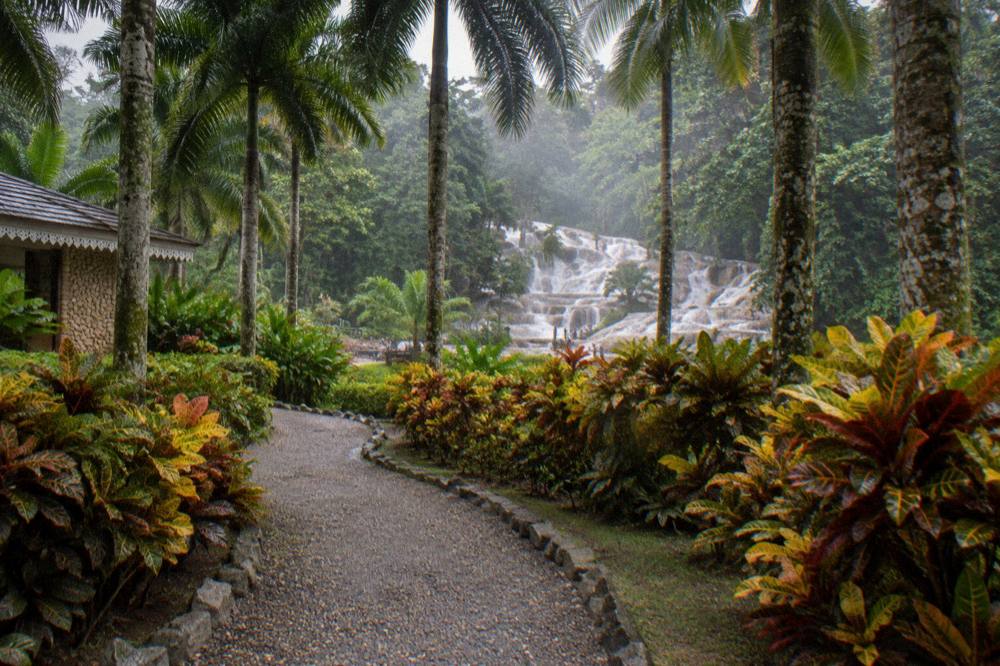
If you are already in Jamaica and shoeless, you have a few options in descending order of convenience. Shops in the resort towns around Ocho Rios and Montego Bay carry inexpensive water shoes during the high season, though selection and sizing run thinner than at home, and the shops nearest the port price for captive traffic. The park shop itself is the option of last resort, workable but queue-prone, exactly as the FAQ warns. Cruise passengers have the tightest calculus of all: your ship is in port for the day, the falls are only about 4 km and six or seven minutes from the Ocho Rios pier, and every minute spent shoe shopping is a minute not climbing. That makes packing the pair before you fly, or in your cruise bag, decisively the right move. The cruise day crowds guide explains the timing logic in more depth.
The buying options rank clearly once you weigh price certainty, sizing and time cost against each other:
| Where you buy | Fit certainty | Price certainty | Time cost on the day |
|---|---|---|---|
| At home, before you travel | High; try before packing | Known before you commit | None |
| Resort-town shop in Jamaica | Medium; seasonal stock, thinner sizes | Varies; shops near the port price high | Some, on your travel day |
| Park shop at the falls | Low; common sizes can sell down | Unknown until you ask at the counter | Highest; the FAQ warns the lines can be long |
| No purchase, climb anyway | None | Free | Reckless; bare feet are unsuitable on wet travertine |
For families, sizing is the reason to shop early. Children's feet grow between booking and travelling, so check the fit the week before departure rather than the month you booked. The climb has no strict age restriction, but the FAQ suggests age 7 is a reasonable minimum, and there is a kids' splash pad in the park for the ones who are too small for the terraces, where ordinary water shoes or even sandals are fine. The family angle, including the splash pad and the dry walk, is laid out in Dunn's River Falls with kids.
Do You Keep The Shoes On For The Whole Visit?
For the climb and the pools, yes; for the beach and the walkways, it is your call. Most visitors wear their water shoes from the first step of the climb until they change at the end, because the natural pools along the route have rock bottoms and the beach area sits directly at the base of the falls. The dry paths and gardens are fine in ordinary footwear if you prefer to carry the shoes until the water starts.
The practical pattern looks like this: arrive, change into swimwear and water shoes, do the climb with the guided group, swim in the pools and at the beach while still shod, then change into dry clothes and proper shoes for the gardens, the craft market and the ride back. Trying to manage the transition mid-climb, carrying sandals or stashing footwear on the rocks, is where people lose shoes. The park's own bring-list points the same way: towel, swimwear, sunscreen, water shoes, a waterproof pouch for phone and cash, and a change of clothes or quick-dry items for the exit.
A word on the pouch, because it pairs with the shoes in every packing list worth reading. Waterproof cases and pouches let you carry a phone onto the climb for photos, which is genuinely worth doing, since the professional photographers who follow the groups sell their packages separately and prices vary. A shoe that protects your grip and a pouch that protects your phone solve the two most common equipment regrets on the terraces in one shopping trip.
Whatever you pick from Dunn's River Falls Tour, bring your own shoes in the bag, and the gate, the queue and the first pool of the climb all take care of themselves.
Common Questions About Water Shoes At Dunn's River Falls
Do You Need Water Shoes For Dunn's River Falls?
Yes. The park's visitor FAQ recommends closed-toe water shoes with good grip for the climb, and the terraced travertine is wet and slippery in sections. Flip flops, smooth-soled sandals and bare feet are not suitable for the climbing route.
Can You Buy Water Shoes At Dunn's River Falls?
Yes, water shoes are sold at the falls, but the park warns that the lines for them can be long. No verified price is published, so ask on arrival. Arriving with your own pair is the smoother plan.
Are Crocs Okay For The Climb?
No. Crocs and similar clogs have smooth, hard soles that slide on polished wet rock, and the loose fit means moving water can strip them off. Use closed-toe shoes with soft gripping rubber and a secure strap or lace instead.
What Should Water Shoes Fit Like?
Snug but not tight: heel locked, toes just short of the front, and every strap cinched before you enter the water. Tighten straps again after your first immersion, because they relax when soaked. If between sizes, size up a half size and take out the slack with the straps.
Do Tours Include Water Shoes?
No. Across the tour listings on this site, water shoes, towels and swimwear are never supplied, and several listings name them as exclusions. Footwear is the one item you must pack yourself.
Can You Enjoy The Falls Without Water Shoes?
Partly. The dry walk lets you follow the falls on land after paying admission, and the beach and pools at the base allow swimming. But the signature climb itself needs closed-toe grip shoes, either brought from home or bought at the park shop.