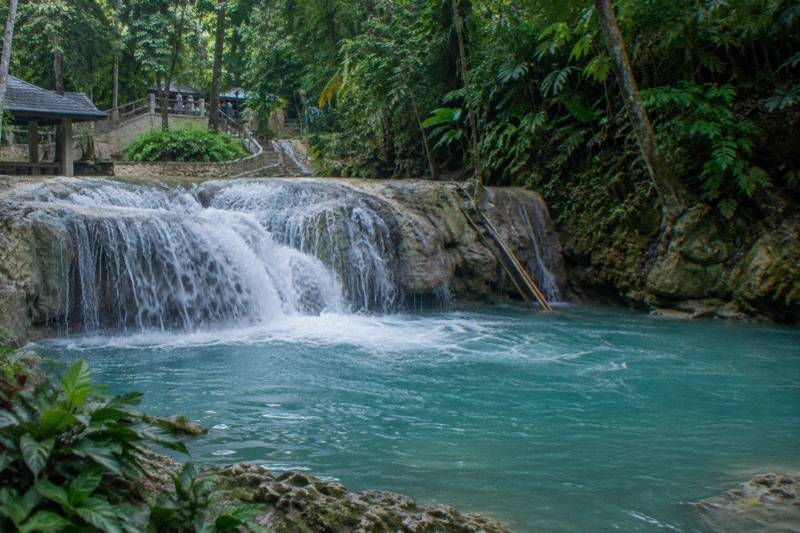
How To Dress For Dunn's River Falls?
A focused packing answer for the falls climb: what to wear, what shoes work, what to bring and what to leave behind, with links to the full what-to-wear guide.
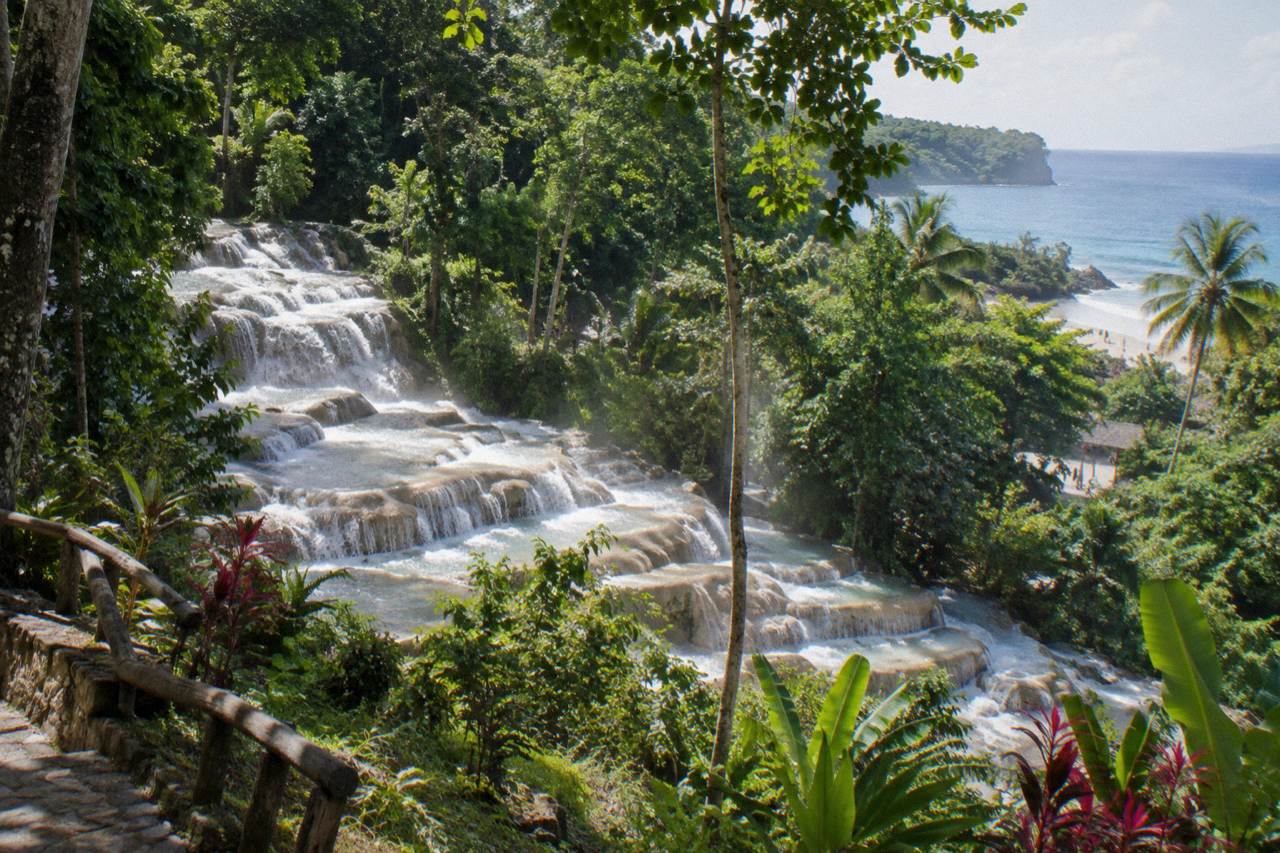
Dress in a swimsuit you can climb in, worn under quick-dry shorts and a light top, with closed-toe water shoes on your feet. Bring a towel, reef-safe sunscreen, a dry change of clothes, and a waterproof pouch for your phone and cash. Skip denim, jewellery, flip-flops and anything you would not want soaked in a river for an hour.
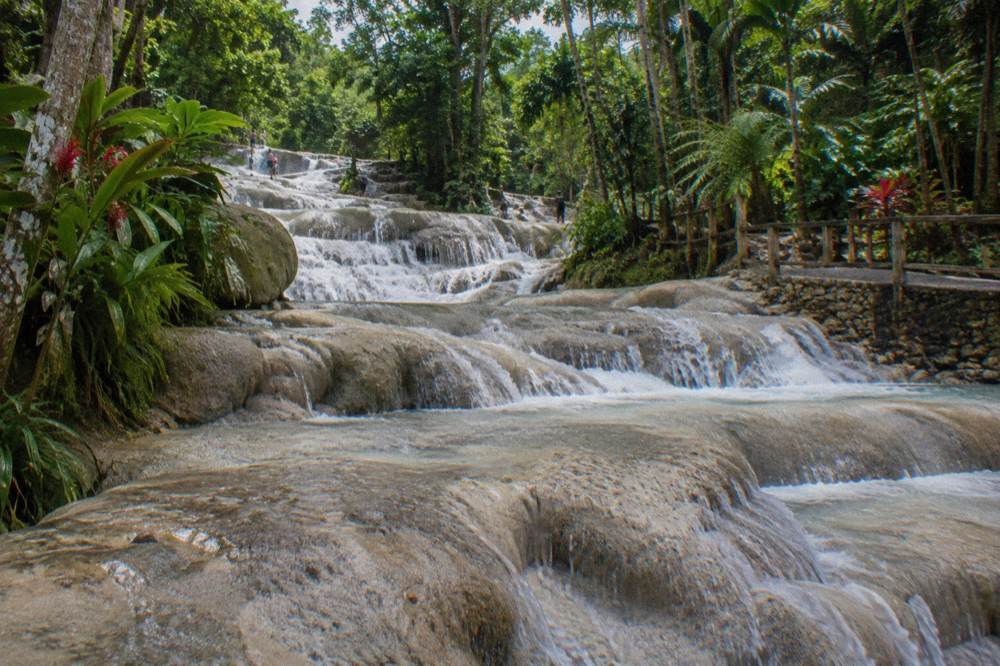
That is the whole answer in one breath. The falls climb runs in guided groups from the beach at the bottom to the exit at the top, and you will be in moving water for most of it, standing on wet, uneven limestone terraces. Everything you wear will get wet. Everything you carry that is not protected will get wet too. Dress for a river hike, not a beach photo shoot. Wet clothes also mean wet snacks, so check what food you can bring into Dunn's River Falls before you pack a cooler for the day.

The park's own FAQ recommends exactly this kit: towel, swimwear, sunscreen, water shoes, an underwater camera or a phone protector, a change of clothes or quick-dry clothing, and a waterproof pouch. Nothing exotic. The difference between a good day and a bad one at Dunn's River is usually footwear and fabric choice, not fitness. If you want the long version, with outfit ideas by season and by tour type, the full what to wear guide goes into far more depth than this page needs to.
The climb itself takes 45 minutes to an hour from base to top, and the average visitor spends about an hour and a half inside the park from entrance to exit. That is a short window, but it is long enough for chafing swimsuit seams, sunburned shoulders and pruned fingers in a wet cotton t-shirt to become real problems. Choose clothes that work wet, dry fast, and stay put while you scramble.
If you are already booked on something, the dressing job gets simpler, because the tour description tells you what is and is not included. The Ocho Rios Blue Hole and Dunn's River Falls Tour, from $89.72 per person with a 4.9 rating from 446 reviews, lists towels, water shoes and swimwear as exclusions, so everything on your body and in your bag is your own responsibility. Many shorter trips are the same. Pack as if no one is providing anything.
What Should You Wear For The Climb Itself?
A secure swimsuit as the base layer, quick-dry shorts or a rash guard over it, and nothing made of cotton or denim. Women do best in a well-fitted one-piece or a sports-bikini combination that will not shift in moving water. Men should choose swim shorts with a drawstring. A snug, simple outfit beats a stylish one here every single time.
The reason is mechanical. The climb moves through a chain of terraced pools, some waist-deep, some with enough current to knock a loose board short down to your knees. Guides hold hands in a human chain through the steepest sections, which means your arms are occupied and your clothing is doing its own work staying in place. A swimsuit that fits properly when dry will fit properly when a guide is pulling you up a slick rock step. One that fits loosely will not.
Fabric is the second decision. Quick-dry synthetics, the same polyester and nylon blends sold for hiking and board sports, shed water in minutes and stay comfortable through the drive back. Cotton holds water against your skin for the full hour and a half, gets heavy, and turns cold the moment a breeze picks up on the observation decks. Denim is worse: it soaks through, stiffens, and takes hours to dry. If your plan is to climb in the shorts you traveled in, change that plan before you leave the hotel.
Sun coverage matters more than visitors expect. The beach and the lower terraces are fully exposed, the tropical sun is fierce by mid-morning, and wet skin burns faster than dry skin because water magnifies exposure. A long-sleeve rash guard solves the shoulder-and-back problem for about the price of a souvenir t-shirt, and it doubles as sun protection for the beach hour afterward. Reef-safe sunscreen on whatever skin remains bare, reapplied after the climb, finishes the job.
One more layer question comes up in every season: do you need a cover-up or dry shirt for the park itself? Yes, a light one. The stairs, gardens and viewing platforms are a normal walk, and a damp swimsuit alone gets uncomfortable once you leave the beach and spend time walking around the rest of the park. A thin quick-dry shirt or wrap you can pull on wet solves it. It also gives you something dry-ish for the minibus back.
What Shoes Actually Work On The Falls?
Closed-toe water shoes with grippy soles are the standard, and the park recommends exactly that. Old sneakers work but stay soggy all day. Flip-flops, bare feet and smooth-soled sandals do not: the limestone is slick, and you will be stepping on submerged rock edges the whole way up. Water shoes are sold at the park, but lines at the shop can be long, so bring your own.
This is the single most consequential clothing decision of the day. The terraces are living rock, coated in constantly wet biofilm, and the difference between a grippy shoe and a bare sandal is the difference between walking up and sliding down. The dedicated water shoes guide on this site covers sole types, strap systems and sizing in detail if you want the full rundown. The short version: a shoe that encloses the toe, fastens firmly at the heel or ankle, and has a real rubber tread pattern.
Do not rely on buying shoes at the gate as your plan A. The park's FAQ is blunt that the on-site shop exists but queues can be long on busy mornings, which are exactly the mornings you would be shopping. Rental pricing for shoes and lockers is not published in a verifiable form, so treat both as ask-on-arrival items rather than budgeted figures. Tour vehicles offer one workaround worth knowing: on most guided trips you can leave dry clothes, towels and valuables locked in the vehicle while you climb, which shrinks what you actually carry up the falls.
The sock question deserves a sentence. Thin neoprene or synthetic socks under water shoes reduce chafing on the descent stairs and add warmth for anyone prone to cold feet; cotton socks do the opposite, holding grit against your skin for an hour. If you own neoprene socks, bring them. If not, do not buy socks for this, the shoes alone are enough for most people.
What Should You Bring Besides Clothes?
A towel, a dry change of clothes for after, a waterproof pouch for phone and cash, reef-safe sunscreen, and a small dry bag if you have one. Leave the passport, the laptop and the good jewellery at the hotel. Lockers exist at the park, and tour vehicles double as storage on most guided trips, so the list of what must actually go up the falls with you is short: you, your shoes, and a waterproof pouch.
The pouch earns its place in the bag. Professional photographers follow climb groups and sell photo packages afterward, which is a genuinely good option for shots you cannot take yourself, but almost everyone also wants their own camera. A phone in a sealed pouch on a lanyard survives the falls fine. A phone in a pocket does not. The same pouch carries the cash you might want at the exit for a coconut or a tip.
| Item | Bring or leave | Why |
|---|---|---|
| Closed-toe water shoes | Bring, or wear them | Park recommendation; the only reliable grip on wet rock |
| Swimsuit worn as base layer | Wear it | Changing facilities exist but queues form; arriving dressed saves time |
| Quick-dry shorts and top | Bring | Comfortable cover before and after the wet sections |
| Towel | Bring | Nothing at the park is supplied free for drying off |
| Dry change of clothes | Bring, leave in vehicle if on a tour | For the ride back; avoids sitting wet for an hour plus |
| Waterproof pouch on a lanyard | Bring | Protects phone and cash through every pool |
| Reef-safe sunscreen | Bring, apply twice | Wet tropical sun burns fast; reapply after the climb |
| Flip-flops | Bring for after, never for climbing | Useful as post-climb footwear and beach walking |
| Passport, jewellery, electronics | Leave at the hotel | No reason for them to risk the water |
| Cotton or denim clothing | Leave it | Soaks, chills, chafes, and dries in hours |
Two items on that table surprise people in opposite directions. Flip-flops are not villainous here, they are simply for the wrong part of the day: fine on the beach at the base, useless on the rock. And the dry change of clothes matters more than visitors expect, because the drive back to Montego Bay runs about an hour and a half, and sitting in a soaked swimsuit on an air-conditioned bus is how people catch the chills that ruin the next travel day. A shirt and shorts in a plastic bag costs nothing and pays for itself.
For anyone weighing how much of the day they want to build around the falls, the catamaran option is worth a look: the Dunn's River Catamaran Cruise From Ocho Rios, 4.5 from 122 reviews and from $141.75 per person, pairs the climb with a sail and snorkel, and the same dressing list covers both halves, with the addition of a windbreaker layer for the boat. Check availability if a sail-and-climb day sounds like your pace.
How Should Kids Dress For The Falls?
Children should wear the same kit as adults, scaled down: a secure swimsuit, quick-dry cover, and proper closed-toe water shoes in a size that actually fits. The park sets no age restriction on the climb, though its FAQ suggests age 7 as a reasonable minimum, and a splash pad and beach give younger kids a wet day without the full ascent.
Shoes are where parents most often slip. A child in hand-me-down water sandals with worn tread has a worse climb than a child in new, grippy shoes, because kids bounce rather than step, and every bounce lands on slick rock. If you are buying one thing new for this trip, buy the child's shoes, not yours. The full planning picture, including which parts of the park work for which ages, is in the falls with kids guide.
Dress young children for the after-climb as much as the climb. Kids get cold standing around in wet clothes faster than adults do, and the complaint that ends a good park visit is almost never the falls, it is the shivering twenty minutes afterward. A full dry outfit per child, including a dry top kept in the vehicle or a locker, fixes it. A rash guard for sun, rather than sunscreen alone, is the other kid-specific upgrade worth making: it does not wash off in the pools and does not need a wriggling-child reapplication session.
One honest note for families still choosing a tour: some listings in the falls-only and beach-club families carry small review pools, so read the inclusions carefully rather than relying on ratings. The Falmouth Bamboo Beach Club and Dunn's River Falls trip, for instance, from $99 per person, includes a four-course tapas lunch and beach chair but carries only 17 reviews at 4.1, a pool too small to treat as a verdict either way. Judge the itinerary, not the stars.
What Should You Not Wear?
Denim in any form, cotton t-shirts as your only layer, loose jewellery, watches, flip-flops on the climb, brand-new leather sandals, and anything white or sheer that turns transparent when soaked. Also skip heavy makeup and anything on your wrists or neck that a rock or a guide's grip could catch. The falls take everything you wear fully underwater, repeatedly.
The transparency point is not trivial. A light-colored swimsuit that is modest dry can be anything but after three submerged terraces, and a soaking turns plenty of everyday clothing see-through. Dark or patterned swim fabrics avoid the problem entirely. Try the suit under a tap at home if you are unsure; what it does wet in the bathroom is what it will do wet at the falls.
Jewellery and watches are a loss risk rather than a modesty one. Rings slip off pruned fingers, bracelets catch on rock, and necklaces meet a guide's outstretched hand at speed in the chain sections. Leave all of it in the room safe. The same logic covers the good camera: unless it is genuinely waterproof-rated, not "splash resistant", it stays behind or goes in the pouch, because the spray at the mid-falls platforms is constant on a breezy day.
Makeup and hair deserve a quick line. Waterproof mascara or none at all; the falls do not care about your eyeliner. For hair, a tight braid or bun survives the pools and the wind far better than loose hair, which also tangles in the human-chain sections where you are close to other climbers. A cheap elastic band is the best-value piece of kit on this entire page.
Does The Season Or Tour Type Change The Outfit?
Only at the margins. A rash guard adds warmth in the winter months and sun protection year-round, and a light layer helps on catamaran and beach-club tours where you are wet, then windy, for hours. The core kit, swimsuit, quick-dry layers, closed-toe water shoes, pouch and towel, does not change with the calendar or the operator. Dress for water first and weather second.
Jamaica's winter visitors sometimes underestimate this. From roughly December through March, a wet climb followed by an open-deck boat ride or an air-conditioned bus can feel genuinely cold, and the people shivering are always the ones in thin swimsuits with no layers. The fix is the same dry shirt and light wrap already on the list. Summer visitors have the opposite problem, sun and heat, and the rash guard earns its keep again. There is no season in which cotton wins.
Tour type shifts the accessories more than the outfit. A beach-club tour adds flip-flops for the sand and a cover-up for the restaurant. A catamaran day adds the wind layer. A Blue Hole combo adds nothing at all, because the Blue Hole swim asks the same of your shoes and suit as Dunn's River does. This is why the packing list stays short: nearly every itinerary on the north coast is built around the same wet-rock, wet-suit day.
The official park materials behind these recommendations are worth reading directly for anyone who likes primary sources: the park FAQ's clothing and shoe entries, and the operator's official site for tickets and current park activities. The Falls is run by the St. Ann Development Company under the Urban Development Corporation, which is why park guidance, rather than any one tour operator, is the authority on what to wear.
Common Questions About Dressing For Dunn's River Falls
How To Dress For Dunn's River Falls?
Wear a secure swimsuit under quick-dry shorts and a top, with closed-toe water shoes on your feet. Bring a towel, a dry change of clothes, reef-safe sunscreen and a waterproof pouch for your phone and cash. Avoid denim, cotton, loose jewellery and flip-flops, since the climb keeps everything you wear soaked for roughly an hour.
Do You Have To Wear Water Shoes At Dunn's River Falls?
Closed-toe water shoes with good grip are what the park recommends, and they are the only footwear that handles the wet limestone reliably. Shoes are sold at the park, but queues at the shop can be long, so bringing your own pair is the better plan. Old sneakers with tread also work, though they stay soggy afterward.
Can You Climb The Falls In A Regular Swimsuit?
Yes, a well-fitted swimsuit is the ideal base layer. Choose one that stays secure in moving water: a snug one-piece or sports-style top for women, drawstring shorts for men. The climb involves hand-holding and rock steps, so the test is whether the suit stays put when pulled, not how it looks on the beach.
What Do You Do With Your Clothes And Valuables During The Climb?
Lockers are available to rent at the park, and on most guided tours you can leave dry clothes, towels and valuables locked in the tour vehicle. Whatever you take up the falls should fit in a waterproof pouch on a lanyard. Leave passports, jewellery and non-waterproof electronics at the hotel entirely.
Should Kids Dress Differently For The Falls?
Children need the same kit as adults, properly sized: secure swimsuit, quick-dry layer and closed-toe water shoes with real grip. A rash guard beats sunscreen alone for kids, since it does not wash off in the pools. Pack a full dry outfit per child for afterward, because children chill quickly standing around in wet clothes.
Is There A Dress Code For The Park Outside The Climb?
Away from the beach and the falls, light resort clothing is the norm, and a dry cover-up is simply more comfortable than a wet swimsuit when you walk the gardens and viewing decks. A thin quick-dry shirt or wrap you can pull on while damp solves it, and doubles as cover for restaurants and the drive back.