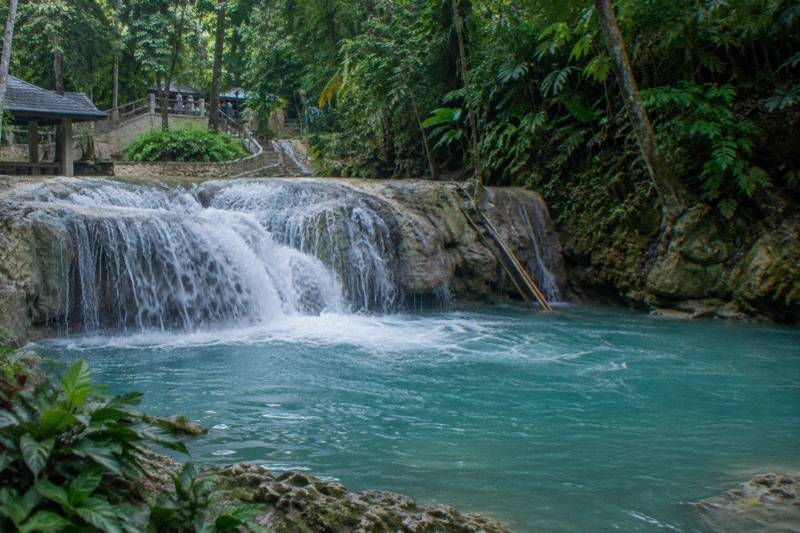
Is Dunn's River Falls Safe? Slips, Rules And Tips
Dunn's River Falls is a terraced travertine waterfall that empties directly into the sea near Ocho Rios, and it is climbed in guided groups every day of the year. The safety story is mostly about footing: wet limestone, the right shoes, and knowing your own limits before you step into the water.
Short answer
Dunn's River Falls is climbed daily in guided groups, with lifeguards on site and a beach at the base. Entry costs US$25 for adults and US$17 for children aged 4 to 12, the park is open 8:30 a.m. to 4:00 p.m. (7:00 a.m. on cruise days), and the climb takes 45 minutes to an hour. Safe footing depends almost entirely on closed-toe water shoes and honest self-assessment.
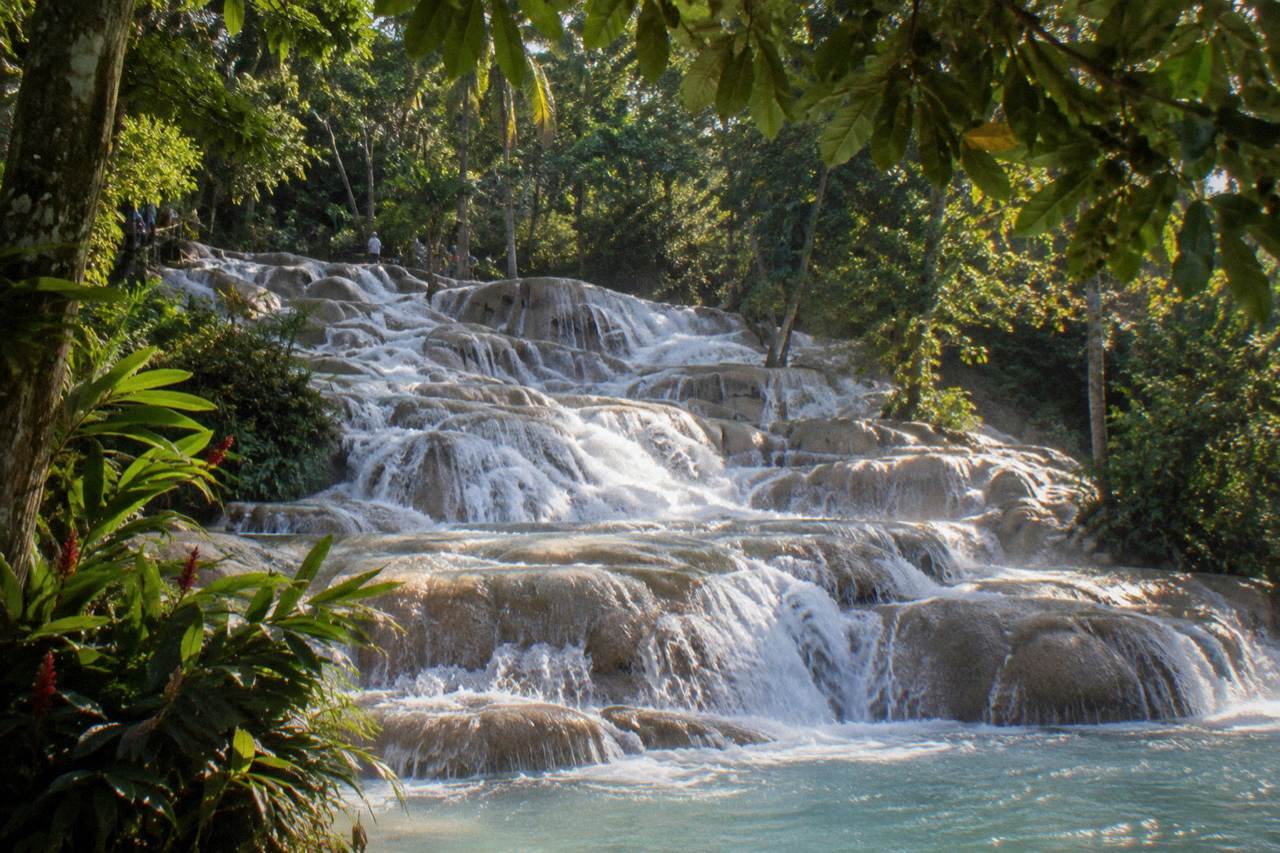
Dunn's River Falls near Ocho Rios is one of the few travertine waterfalls in the world that empties directly into the sea, and climbing it is a guided, hands-on walk up a living staircase of limestone. The park is open 365 days a year, run by the St. Ann Development Company under the Urban Development Corporation, and it absorbs thousands of cruise passengers and hotel guests a week during the high season. None of that changes the basic physics: you will be walking on wet rock, in moving water, with a crowd around you. This guide lays out what actually causes slips at the falls, what the rules say about guides and footwear, who should sit the climb out, and what the dry walk offers instead. Nothing here is a verdict on whether the falls are safe or not; it is the planning information you need to make that call for yourself. If you're packing for a full day at the park, our guide to bringing food into Dunn's River Falls explains the locker setup, what the official guidance says about snacks, and which tours include lunch.
Is The Climb At Dunn's River Falls Dangerous?
The climb is a 45-minute to one-hour ascent of wet, terraced limestone in moving water, run in guided groups with lifeguards on site, and the average visitor spends about an hour and a half from park entrance to exit. There is no abseiling, no jump and no deep-water swimming on the route itself. The hazard is footing, full stop, and it is managed with guides, group pacing and the right shoes.
The route runs from the beach at the base up a series of natural limestone terraces, through shallow pools and small cascades, to the exit path at the top. You are in the water for most of it, usually holding hands in a human chain at the steeper steps, which is how the guided groups keep everyone upright and moving at the same pace. The rock is not polished smooth like a hotel pool floor; it is uneven, tiered and, in places, sharp enough that bare feet and flip-flops are a genuine problem. Depth is shallow for most of the route, which is why the climb is described as a walk rather than a swim.
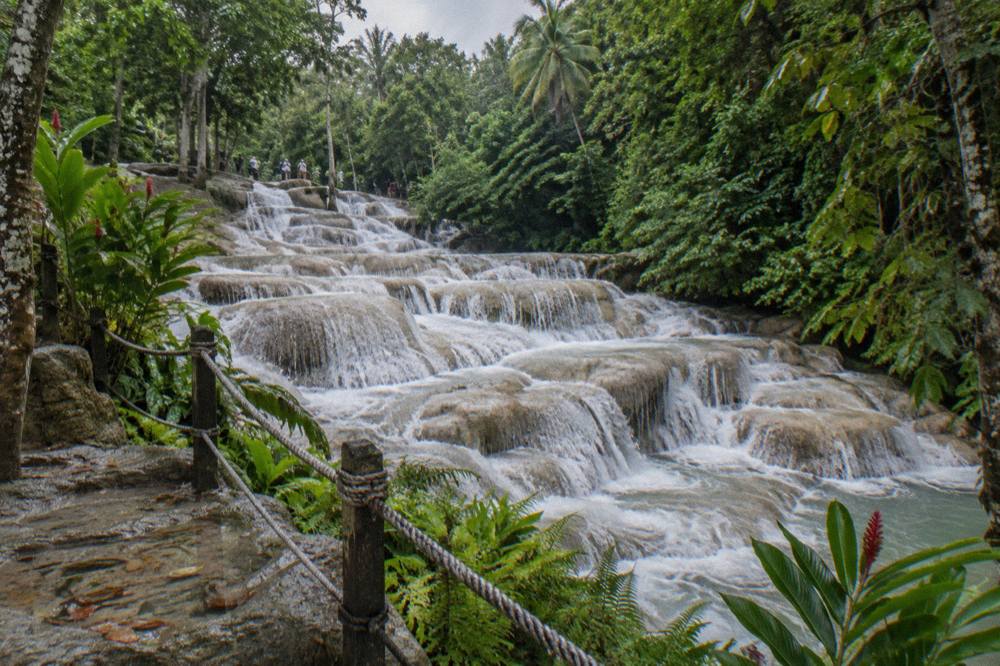
What makes the experience feel manageable to most people is the structure around it. Groups go up together with a falls guide, lifeguards are stationed in the park, and the beach at the base gives you a place to stand in the water without committing to anything. Visitors who want the scenery without the wet climb can use the dry walk, a land-side path alongside the falls, discussed later in this guide. If you are weighing how hard the ascent actually is before deciding, the detail is in how difficult the falls climb really is.
A practical note on expectations: this is a shared, high-volume attraction. On a busy cruise morning you will be climbing near other groups, at a pace set by the guide rather than by you. That is a safety feature, not an inconvenience. Keep with the group, because the guide has not yet pointed out which ledges are slick that day.
Why Are The Rocks At Dunn's River Falls So Slippery?
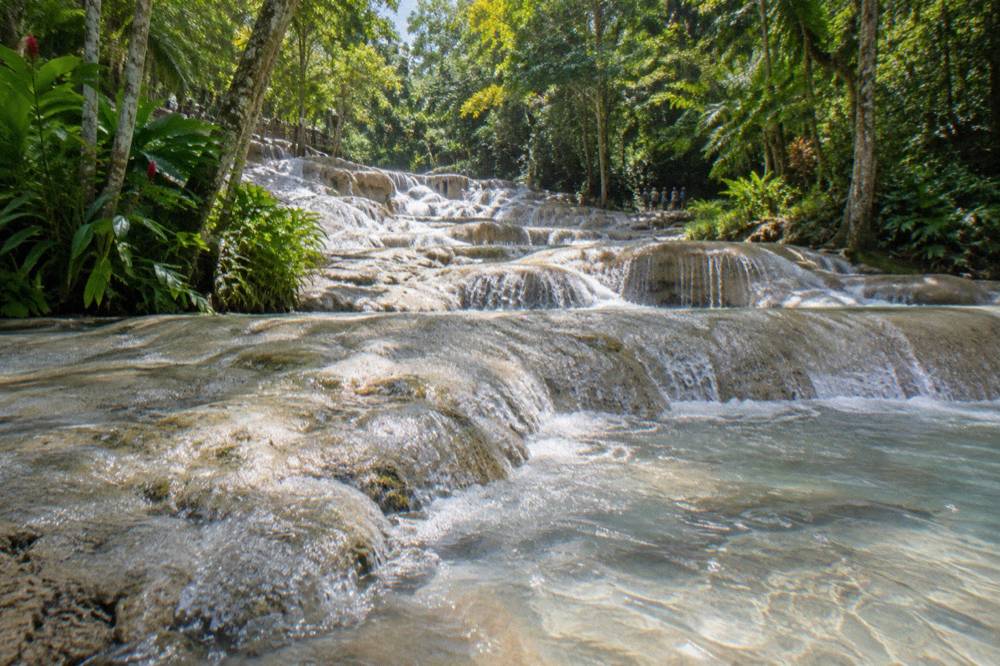
The falls flow over travertine, a soft limestone that the water itself deposits in terraces, and a film of water plus microscopic algae sits on every step year-round. Travertine gives good grip under a proper rubber-soled water shoe and almost none under bare skin or flat-soled sandals. That single material fact drives every footwear and footing rule at the park.
Travertine is formed by calcium carbonate precipitating out of the spring water as it runs over the rock, which is why the falls grow a little every year and why the terraces look like a staircase. The same mineral structure that creates those lovely steps also creates micro-texture: tiny ridges and pockets that a grippy sole can bite into. Add a constant film of flowing water and the surface behaves like a wet tiled bathroom floor, fine in trainers, treacherous in flip-flops or bare feet.
The park's own guidance, republished on the visitors' FAQ page, recommends closed-toe water shoes with good grip, notes they are sold at the falls, and warns the on-site lines can be long. In other words: bring your own. The full gear list is worth reading before you pack, and we cover it in detail in what to wear to the falls and in the dedicated guide to water shoes for the climb.
| Surface situation | Grip under closed-toe water shoes | Grip under bare feet or flip-flops |
|---|---|---|
| Dry upper terraces near the exit | Good | Poor to fair |
| Wet terraces in the main channel | Fair to good | Very poor |
| Shallow pools between steps | Good, water is clear | Poor, foot placement is guesswork |
| Beach and entry rocks at the base | Good | Fair, sharp edges likely |
If you are joining a tour rather than going independently, most operators spell out in the listing what is and is not provided, and several explicitly exclude water shoes, towels and swimwear.
The featured pick on this site, the Ocho Rios Blue Hole and Dunn's River Falls Tour, runs 4 to 5 hours from Ocho Rios, is rated 4.9 from 446 reviews, and starts from $89.72 per person with all admission fees included. Check availability for current dates.
Do You Need A Guide To Climb Dunn's River Falls?
Entry includes the group climb, and in practice the ascent is run in guided human chains, but sources disagree on whether a self-guided climb is formally prohibited, so treat a guide as the default rather than a written law. Going up outside a group is the choice that removes your best safety margin.
The conflict is honest: some park materials describe the guided climb as part of admission, while recent visitor reports describe climbs that were less strictly marshalled. What nobody disputes is that the group format is how the falls are operated day to day, and that the guides know which ledges are slick after rain, where the current pushes, and how to pace a mixed group of kids and grandparents. The official park site lists the climb among its activities, and lifeguards are part of the standard staffing.
Booking through a tour operator adds a second layer: a certified guide who travels with you from hotel pickup to drop-off, which is what the listings for the beach club and combo tours mean when they say a guide accompanies you from pick-up until final drop-off. That matters at the falls because the on-site guides work with many groups; a tour guide who knows your group's fitness can slow the pace or point someone to the dry walk before the climb starts.
| Who is with you | What they add on the climb |
|---|---|
| Park falls guide (included with entry) | Route knowledge, group pacing, hand-chain at steep steps |
| Tour operator guide (on tours) | Fitness-matched pace, liaison with park guide, help before and after |
| Certified lifeguard (park and beach club tours) | Watch on the pools and the beach at the base |
| Nobody, if you climb away from a group | You accept the footing risk alone; not what the park intends |
A step-by-step account of what the climb actually looks like, terrace by terrace, is in the guide to climbing the falls step by step, which pairs well with this page if you want to picture the route before you commit.
What Should You Wear On Your Feet At Dunn's River Falls?
Closed-toe water shoes with grippy rubber soles are the park's stated recommendation, they are sold on site, and the queues at the shop can be long, so buy or bring a pair before you arrive. Old trainers with tread are a workable backup. Bare feet, flip-flops and smooth-soled sandals are the footwear most likely to end your climb early.
The requirement is really about sole design. You want rubber that stays soft when wet, a patterned tread, and a closed toe because the limestone edges and the odd rock in the pools are unforgiving. Strap-on water sandals with a proper tread work for some people, but anything that can slide off mid-current is a hazard to you and to the person behind you. The park sells shoes at its shop, and per its own FAQ the smart move is to arrive already shod; we cannot verify rental or purchase prices, so ask on arrival.
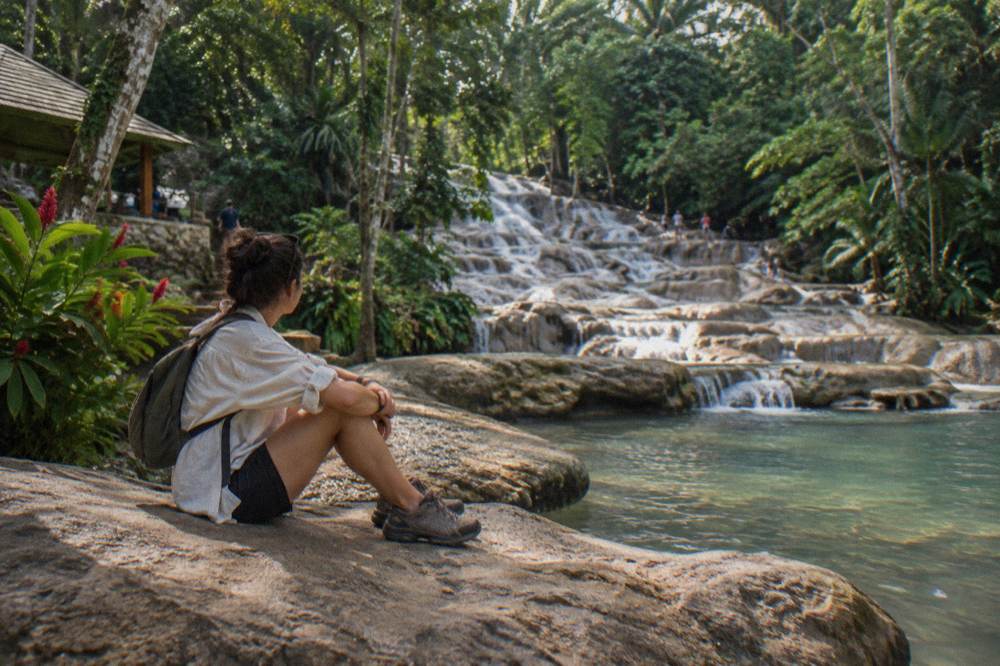
Beyond the shoes, the same FAQ lists the kit that keeps a falls day comfortable and low-drama: swimwear already on, a towel, reef-safe sunscreen, a waterproof pouch for phone and cash, and a change of clothes or quick-dry items. Lockers are available for rent at the park; prices are not published consistently, so check at the entrance rather than budgeting a guessed figure. Guests on operator tours usually have the simpler option of leaving dry bags on the vehicle.
One habit worth adopting regardless of footwear: three points of contact. Two feet and one hand on the rock, or two hands and one foot, whenever you are on a wet step. The human chain is not ceremonial; it is a moving handrail.
How Do Cruise Day Crowds Change Safety At The Falls?
The park opens at 7:00 a.m. on cruise ship days instead of 8:30 a.m. precisely because ship passengers arrive in waves, and the terraces are most congested in the mid-morning block when organized tours stack up. Arriving at opening, or after 2:00 p.m., puts you on the rock with fewer bodies around you, which is the single biggest crowd-safety adjustment you can make.
Cruise traffic into Ocho Rios runs heaviest on Tuesdays and Wednesdays through the season, with ships carrying several thousand passengers each, and Falmouth and Montego Bay callers transfer into the same valley. More people on the terraces means slower groups, longer waits at the steeper steps, and a higher chance that someone above you slips first. It is not a reason to skip the falls; it is a reason to time it. Our page on cruise day crowds at the falls breaks the timing down by port.

Admission for non-residents is US$25 for adults and US$17 for children aged 4 to 12, and the fee covers park entry and the group climb. Jamaican residents pay J$1,000 and J$500 respectively with government ID. Tickets can be bought in advance through the official park ticket shop, which spares you one more queue on a busy morning.
| Arrival window | What you get on the rock |
|---|---|
| 7:00 a.m. on a cruise day | First groups up, emptiest terraces, coolest hours |
| 8:30 a.m. standard opening | Quiet on non-cruise days, filling fast on ship days |
| Mid-morning | Peak congestion, longest chains and waits |
| After 2:00 p.m. | Thinning crowds, warmer, watch the 4:00 p.m. close |
The featured Blue Hole and falls tour keeps its group to a maximum of 30 guests with Ocho Rios pickup, which is a sensible format if you would rather someone else handle the timing arithmetic.
Who Should Skip The Climb At Dunn's River Falls?
The park sets no formal age or health restriction, suggests around age 7 as a reasonable minimum for children, and runs a dry walking path alongside the falls for guests who would rather not get wet. People with limited mobility, balance problems, or a condition where a slip or a bump is a serious matter should choose the dry walk or the beach rather than the ascent.
The honest framing is that the climb requires modest but real fitness: you are pushing off submerged steps for the better part of an hour, in current, in a crowd. The park FAQ describes no snakes on site, no formal health screening, and a family-friendly setup including a kids splash pad, but reasonable self-selection is the actual safety system. If you would hesitate on a wet boat ramp or a steep garden path, the terraces will not suit you.
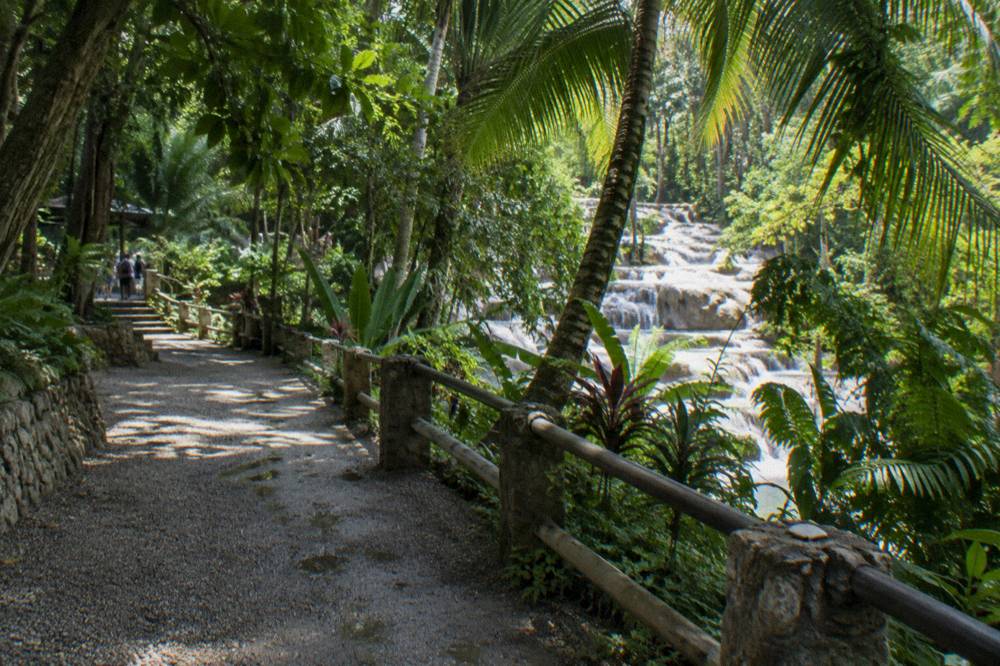
The dry walk deserves more attention than it gets. After paying the same entrance fee, guests who prefer not to get wet can walk the land-side route beside the falls, take photographs, and step into the shallows at the beach at the bottom where lifeguards watch the water. It delivers the scenery, the sea breeze and most of the photographs without the footing risk. Some tour packages note they are not suitable for pregnant guests or people with mobility issues; that language sits on the listing for a reason, so read the exclusions before booking rather than after.
| Situation | Sensible choice at the falls |
|---|---|
| Confident swimmer, decent balance | Guided climb |
| Non-swimmer, steady on feet | Climb with the guide, stay in shallow terraces |
| Balance or mobility concerns | Dry walk plus the beach |
| Children under about 7 | Splash pad, beach, viewing path |
| Pregnant guests or recent injury | Dry walk, check the listing's suitability notes first |
For families weighing the decision as a group, our guide to the falls with kids covers ages, the splash pad and what the climb asks of smaller legs.
Can You Swim Safely At The Base Of Dunn's River Falls?
Yes, swimming happens at the beach where the falls meet the sea and in the shallow natural pools along the route, with lifeguards stationed in the park, and the average visit runs about an hour and a half from entrance to exit. The sea at the mouth is a real beach with real waves, so treat it like one and keep children within arm's reach.
The base of the falls opens onto a small sand beach, one of the few places in the world where a climbable waterfall delivers you straight to the ocean. Lifeguards are part of the park's standard staffing and appear explicitly in several tour inclusions on these tours, including the beach club packages. The pools mid-route are shallow and clear, which is what makes them pleasant rather than perilous; the hazard in the pools is footing, not depth. For more detail, see whether you can swim at the falls.
If your group wants water time without the climb at all, a tour that pairs the falls with a beach club stint gives you lifeguarded swimming as the headline rather than the afterthought. The Bamboo Beach Club and falls pairing from Ocho Rios, rated 4.6 from 11 reviews and priced from $99 per person, lists a certified lifeguard, a beach chair and a tapas lunch among its inclusions.
A few habits carry the day: swim before you climb rather than after, when your legs are fresh; keep valuables in a locker or on the vehicle; and remember that the park closes at 4:00 p.m., with no stated last-entry time, so late arrivals gamble the whole visit.
Is Dunn's River Falls Safe For Children?
The park sets no strict age or height restriction, its FAQ calls age 7 a reasonable minimum for the climb, and the site includes a kids splash pad, a beach and the dry walk as alternatives, so families with younger children have real options rather than a hard no. Children who climb go up inside the guided chain, usually between adults.
The mechanics favour families more than you might expect. The human chain means a small person is flanked by bigger ones, the guide sets a pace the slowest member can hold, and the terraces are stepped rather than sheer. The park FAQ suggests around age 7, one 2026 family-travel source floats a height guideline near 36 inches, and the splash pad exists precisely so that a four-year-old who cannot climb still gets a wet, happy morning. Our full treatment of ages and pacing is in the falls with kids guide.
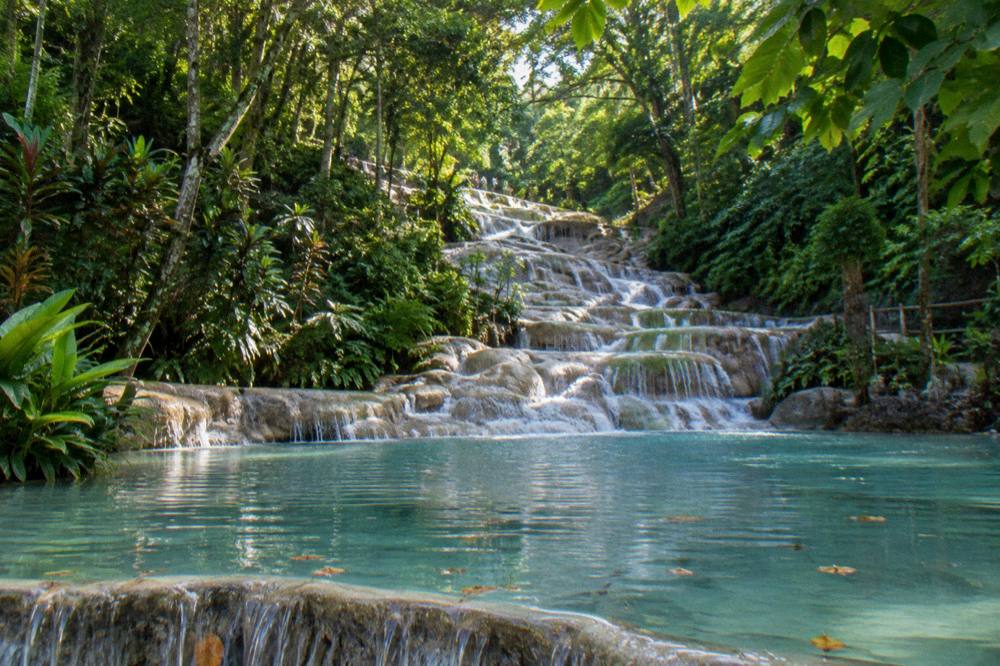
What catches families out is gear sizing, not policy. Children's water shoes in popular sizes sell out or queue longest at the shop, so bring their pair from home, and pack a dry change for afterwards because the sea breeze turns wet clothes cold fast. A short local tour keeps the day within a child's attention span: the guided falls tour from Ocho Rios hotels, 3 hours door to door from $59 per person with entry and hotel transfer included, suits a morning-with-younger-kids rhythm, though with only 9 reviews on its listing it is a small pool of feedback rather than a proven crowd-pleaser like the featured 446-review tour.
What Has Happened At The Park Recently?
The falls closed around October 23, 2025 ahead of Hurricane Melissa and reopened on November 11, 2025 after safety checks and the clearance of more than 200 fallen trees, and it has been open and fully operational since, with no reported closed sections through October 2026. A major redevelopment adding a zipline, lazy river and dining is in the approvals stage, with no construction start date announced. If you're wondering what the climb itself feels like now that the falls have reopened, our full guide to climbing Dunn's River Falls walks through the current route and the dry-walk alternative.
The reopening timeline matters to anyone reading older forum threads that still describe the park as closed; it is not. The redevelopment, reported by the Jamaica Information Service in September 2026, is a master plan for a full-day destination on the existing roughly 50 acres, with the falls climb itself untouched. Since no construction date exists, do not plan around closures that have not been announced. For the latest on whether the falls is open today, see our status guide.
One more practical point for this section, since it affects planning more than safety: the US State Department maintains a Level 3 advisory for Jamaica as a whole, while tourist zones including the falls operate normally under standard precautions. Booked transport through a licensed operator, which every tour listed here provides, addresses the practical part of that.
The long version of the planning picture, including route and entry details in the Dunn's River Falls Tour guide, sits in the main Ocho Rios visitors guide.
Common Questions About Dunn's River Falls Safety
Is The Climb At Dunn's River Falls Dangerous?
The climb is a 45-minute to one-hour guided ascent of wet limestone terraces in shallow water, with lifeguards on site. The hazard is footing rather than depth or height, and it is managed by guided groups, pacing and proper closed-toe water shoes.
Do You Have To Wear Water Shoes At Dunn's River Falls?
Closed-toe water shoes with good grip are the park's stated recommendation, and they are sold on site where queues can be long, so bring your own. Bare feet and flip-flops give almost no grip on wet travertine.
Can You Climb Dunn's River Falls Without A Guide?
Entry includes the group climb, and the ascent is run in guided human chains, though sources conflict on whether climbing without a guide is formally prohibited. Going up with the group is the default and the safer choice.
Is There An Alternative To Climbing The Falls?
Yes. After paying the entrance fee, guests who prefer not to get wet can take the dry walk, a land-side path alongside the falls, plus the beach and splash pad at the base.
What Is The Minimum Age To Climb Dunn's River Falls?
The park sets no strict age restriction but suggests around age 7 as a reasonable minimum for the climb. Younger children have the splash pad, the beach and the viewing path.
When Is The Falls Least Crowded And Safest To Climb?
Arrive at opening, 7:00 a.m. on cruise ship days and 8:30 a.m. otherwise, or after 2:00 p.m. Mid-morning on cruise days is the busiest window on the terraces.