How Difficult Is It To Climb Dunn's River Falls?
An honest difficulty breakdown of the Dunn's River Falls climb: footing, handholds, time, guides, and who should take the dry walk instead.
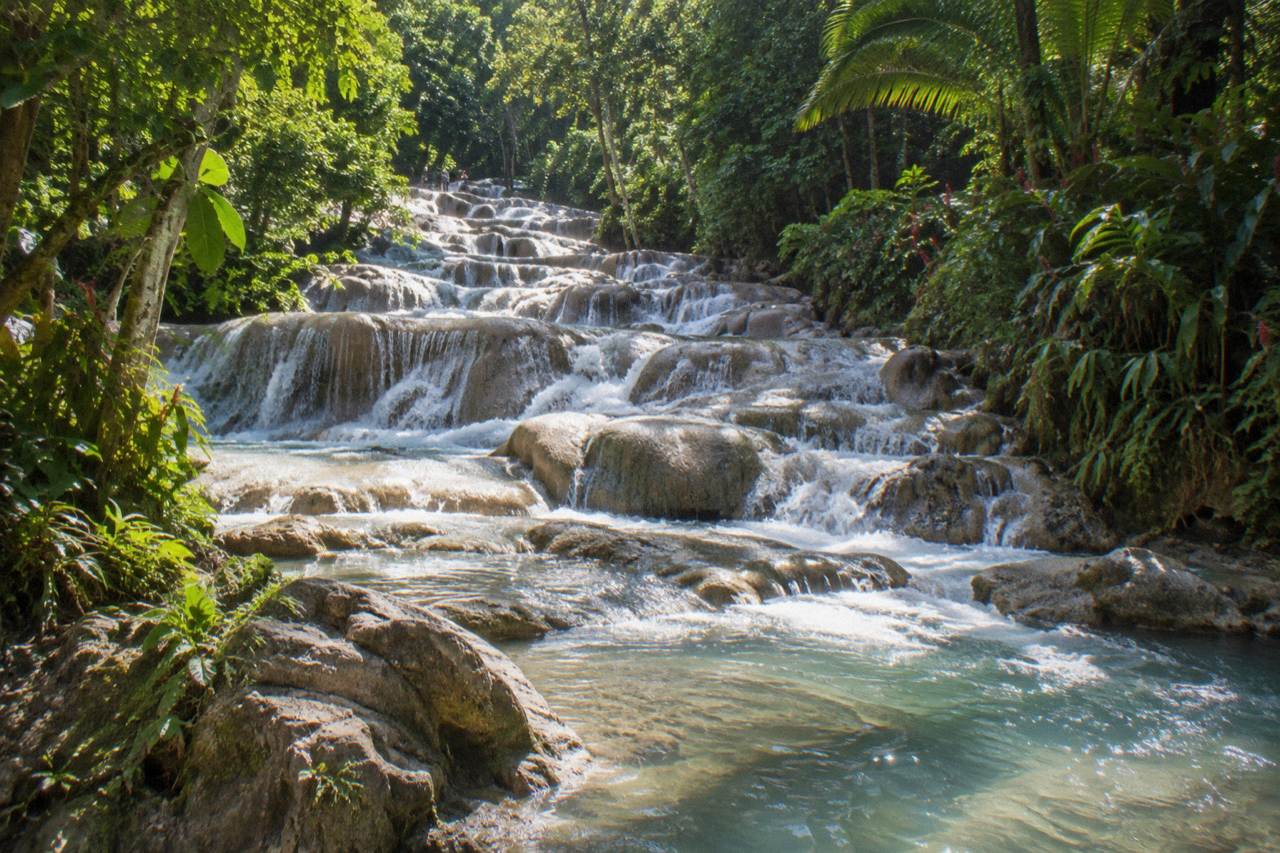
The climb is a moderate, hands-on scramble rather than a hike, and most people of average fitness finish it in 45 minutes to an hour. You are wading through moving water, holding hands in a human chain, and stepping on wet, uneven limestone ledges. It is slippery enough that water shoes matter more than muscles, and nobody should expect a staircase with railings.
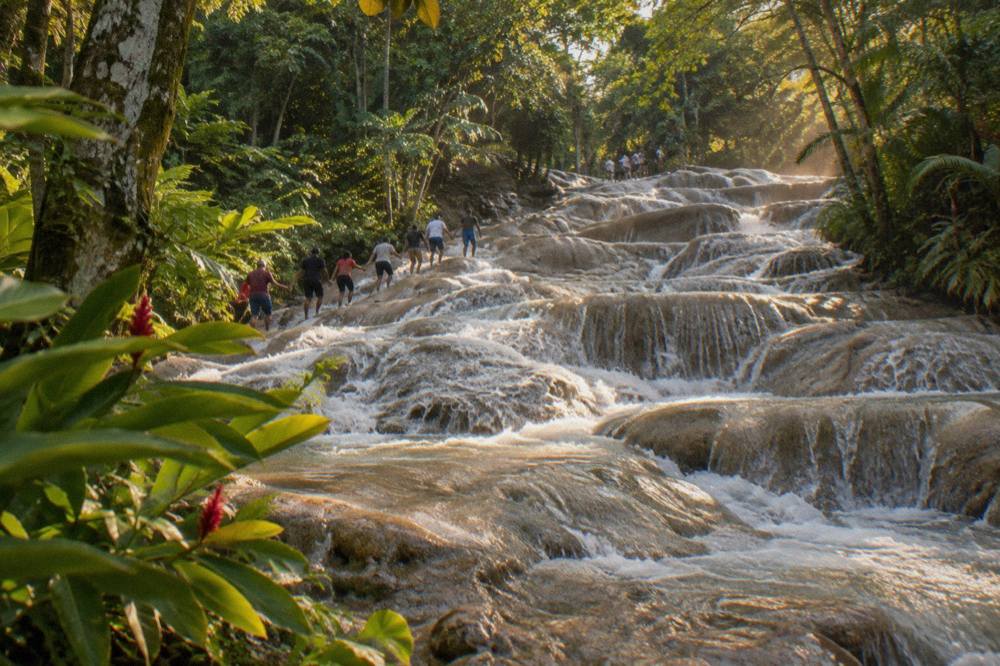
That is the honest summary, but difficulty at Dunn's River is less about cardio and more about confidence on wet rock. The falls is a terraced travertine waterfall that empties directly into the sea, which is why the climb reads differently from a trek: you start at the beach, walk into the water, and work upward through a series of natural limestone terraces, some ankle-deep, some closer to waist-deep. The park's own FAQ says the climb takes 45 minutes to an hour base to top, and that the average visit, entrance to exit, runs about 90 minutes. If that timeframe sounds manageable, you may be wondering whether you even need a tour, and our guide to visiting Dunn's River Falls on your own covers exactly what a self-arranged trip involves.
Groups climb in a human chain, holding hands, which surprises first-timers. The chain is a safety measure: it gives everyone three points of contact without anyone needing upper-body strength, and it keeps the group moving at the pace of the slowest climber. If you can walk briskly for an hour on a beach and keep your balance on a pool floor, you have the raw ability. What trips people up, literally, is footwear and expectations.
Expect to get fully wet from the knees down and probably splashed higher. Expect a few ledges where you take a small seated step, and natural pools partway up where the group pauses. There is no roped route, no metal handrails, and no dry shortcut inside the water channel itself. The park's FAQ answers the most common preparation questions directly, from what to bring to how the climb is organized: the official visitors site FAQ is worth two minutes before you go.
What The Climb Feels Like, Stage By Stage
The route breaks into three feels: a shallow, easy start at the beach, a mid-section of deeper pools and bigger terraces where the hand-holding matters most, and a gentler final stretch to the exit paths. Each stage has different footing.
The start is forgiving. You enter from the beach beside the falls' base, where the water is generally shallow and the terraces are wide and low. This is where guides size up the group and set the order of the chain, strongest and steadiest positioned where they help most. People who feel wobbly here are usually just adjusting to the sensation of moving water; two terraces later most have found their rhythm.
The middle section is the real climb. Terraces get taller, pools get deeper, and the water moves faster over the ledges. You will place feet by feel as much as sight, because the water distorts depth. Handholds are the person next to you and the rock itself, which is smooth travertine, worn by decades of water and feet. This is where closed-toe water shoes earn their keep, and where the chain's slow pace is a feature: nobody is rushed, and guides call out footing line by line.
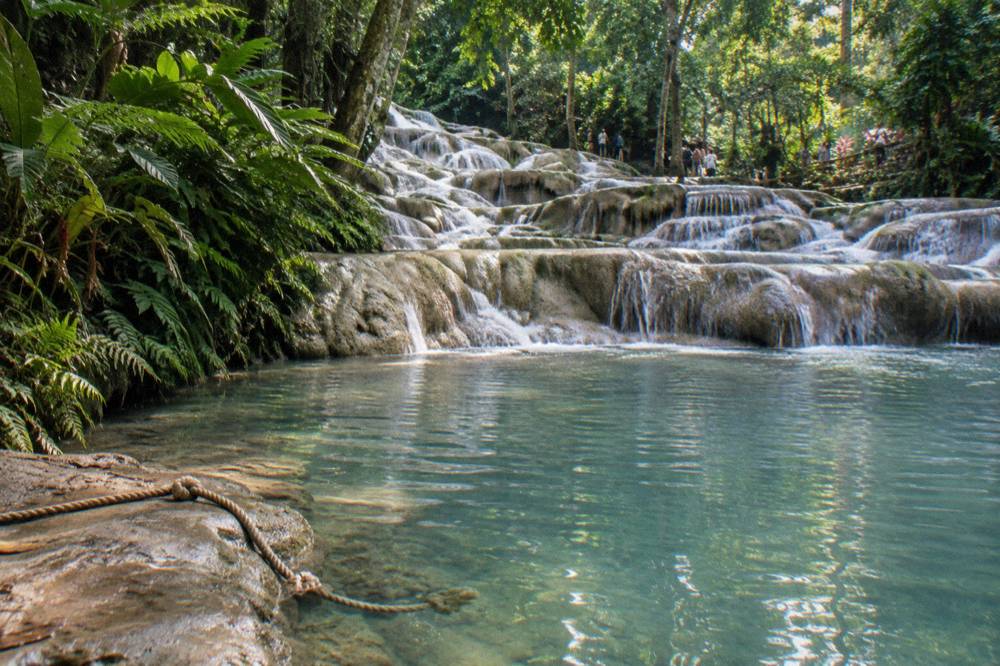
The upper stretch eases off. The angle relaxes, the terraces shallow again, and most groups finish with a walk out on the path at the top rather than a dramatic final wall. Guides usually pause for photos at set points, which doubles as recovery time. For a fuller walkthrough of the route and its decision points, see our step-by-step climbing guide.
Do You Need A Guide And Special Shoes?
Climbs are run in guided groups, and a falls guide comes with your admission, though sources disagree on whether a self-guided climb is permitted, so treat that as a question for the gate rather than a settled rule. Shoes are the more practical issue: closed-toe water shoes with real grip are strongly recommended, and ordinary flip-flops or bare feet are how most slips happen.
On guides: park materials describe the group climb as part of the experience, organized in human chains for safety, while some recent visitor accounts describe the guided element as optional. That conflict is real and unresolved, so do not build your plan around climbing solo. Ask at the entrance if it matters to you. In practice almost everyone climbs with a group and guide anyway, because the guide sets the pace, picks the line, and knows exactly which ledges are slick after rain. Our safety tips guide covers the practical precautions in more depth.
On shoes, do not overthink the brand, think about the sole. You want closed-toe, snug-fitting water shoes with a grippy rubber sole, the kind sold at any beach shop for modest money. The falls sells them on site too, but the park's own FAQ warns the lines can be long, which eats into a 90-minute visit. Ask about the price on arrival rather than assuming. What you should not wear: flip-flops (they float away and offer zero grip), thin-soled canvas trainers (they turn to skates on wet travertine), or bare feet (the rock is polished and the terraces have edges).
A towel, swimwear, sunscreen, and a waterproof pouch round out the kit, and those same packing rules are covered in detail in what to wear to the falls. Tours handle some of this friction for you: operator vehicles typically let guests leave dry bags and towels on board, which is one quiet advantage of a booked excursion over arriving independently.
Who Should Take The Dry Walk Instead?
The dry walk is a real alternative, not a consolation prize: it runs alongside the falls on paths and viewing decks, is included with the same entrance fee, and suits anyone who cannot or should not do a wet scramble, including toddlers, visitors with mobility or balance limits, and people who simply do not want to get in the water. You still see the whole falls.
The park's FAQ is explicit that guests who do not want to get wet can walk alongside the falls after paying the entrance fee. That matters for families split between climbers and watchers: one parent can climb with the older kids while the other walks the path with a toddler, then regroup at the beach, which sits right at the base. There is also a kids' splash pad in the park, which gives non-climbing children their own water moment.
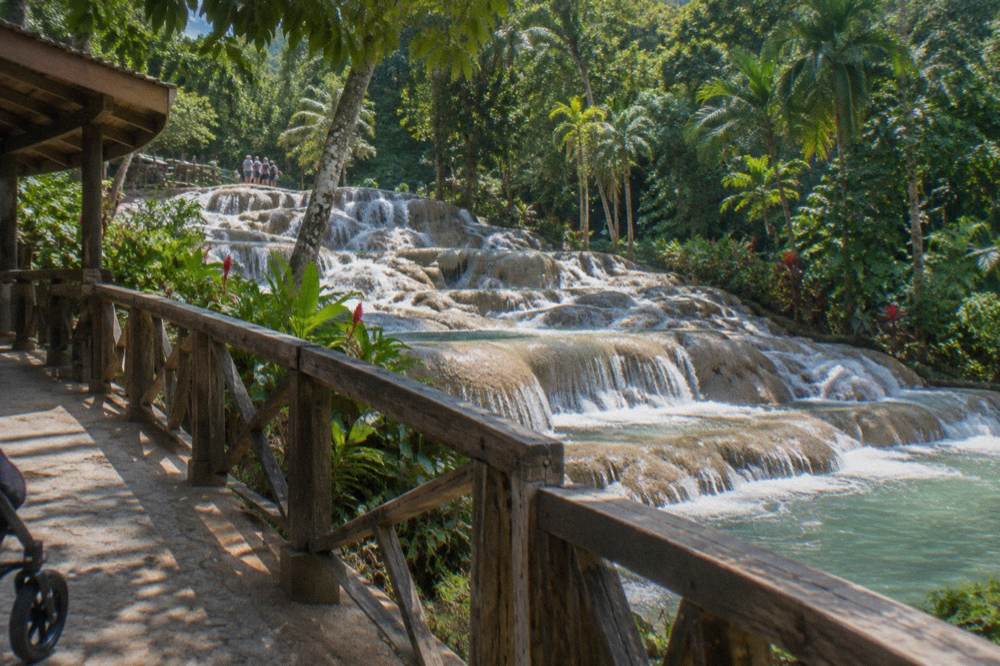
The dry walk also serves a purpose for nervous climbers: you can walk up first, see the terraces and the human chains from the decks, and decide with your own eyes. Plenty of visitors who planned to watch end up climbing, and a few who planned to climb happily settle for the view. The path is the same entrance fee either way, so the decision costs nothing.
| Option | What it involves | Best suited to |
|---|---|---|
| Full climb | Human-chain scramble up the water channel, 45 min to 1 hour, fully wet | Confident walkers, average fitness, age 7 and up |
| Partial climb | Enter, climb the lower terraces, exit on a side path | Cautious first-timers, older kids testing the water |
| Dry walk | Paths and decks alongside the falls, same entry fee | Toddlers, mobility or balance limits, non-swimmers, spectators |
Once you've picked your route, our guide to timing the walk up the falls helps you fit the outing around a cruise stop or a slow morning with kids.
Age guidance comes straight from the park: there is no age restriction, but age 7 is called a reasonable minimum. Fitness thresholds are not published, and the honest answer for anyone with a heart condition, pregnancy, or a mobility limitation is simple: check with the operator's live listing and your own doctor before booking, because no tour listing sets a hard numeric cutoff.
How Fit Do You Actually Need To Be?
Fitness is the wrong yardstick. The climb demands balance, steady footing, and a tolerance for cold moving water rather than endurance, and it is slower and shorter than most gym classes. The people who struggle are not the unfit, they are the badly shod, the hurried, and anyone who assumed the water would be shallow all the way up.
Think of it as a 45-minute to one-hour walk on uneven, wet ground, with the group's pace set deliberately slow. Your legs do quiet stabilizing work the whole way, and your hands are busy holding neighbors, but there is no sustained exertion and no climbable obstacle that requires strength. If you can walk a beach, step onto a low bench without handrails, and stay calm with water at your knees, the physical profile fits.
The mental side deserves more airtime than it gets. The water is cool, the rock is smooth, and the sensation of current pushing at your ankles while you find a foothold is genuinely unfamiliar the first time. Guides manage this well, pausing in pools, joking the group loose, and physically anchoring anyone who wobbles. Swimmers have an advantage in confidence rather than ability, since the pools are shallow enough that you stand in them. Non-swimmers should be honest with the guide at the start.
Two practical notes on timing. First, crowd volume changes the difficulty: on cruise ship days the chain is longer and the pauses more frequent, so the same climb feels more stop-start. Arriving at opening, 7:00 a.m. on cruise days and 8:30 a.m. otherwise, buys you a quieter channel, a point covered in depth in our cruise day crowds guide. Second, the falls reopened fully in November 2025 after Hurricane Melissa, and it has been open and operating with no closed sections reported since, so you are not booking into a half-restricted site, as our is the falls open today page tracks. If you're weighing whether the full climb suits you, our guide to whether you can still climb Dunn's River Falls explains how the route works now and what the dry-walk alternative involves.
If you want the climb bundled with a second swim stop and a proper lunch, the Blue Hole and Dunn's River Falls Tour with Lunch and Cocktails at Reggae Hill runs 7 to 9 hours from $159 per person, rated 4.9 from 317 reviews, with a four-course tapas lunch, drinks, and entry to both attractions included. It is a long day, but the pacing suits exactly the cautious climber this article is written for: a relaxed morning climb, then a recover-afternoon at Blue Hole.
Which Tour Format Suits A Nervous Climber?
If difficulty is your worry, book a guided group tour with admission and transport included, because it removes the two stressors that make the climb harder: arriving at a crowded hour and improvising footwear and timing. The site's featured option, the Ocho Rios Blue Hole and Dunn's River Falls Tour, from $89.72 per person, rated 4.9 from 446 reviews, is a guided group format with admission and transport included.
It runs 4 to 5 hours, departs Ocho Rios with hotel pickup listed, caps groups at 30 guests, and includes all admission fees to both Dunn's River Falls and Blue Hole, plus free cancellation. You can read the full comparison in Dunn's River Falls tour options compared, or check current dates on the operator's live listing.
For tickets and current conditions on the day you visit, the park's official site is the place to check: see the official park site for tickets and current conditions before any independent visit. And for background on why the falls is worth the effort at all, the Jamaica Information Service's feature on the site's planned redevelopment, which will add zip lines and a lazy river around the untouched climb, is at JIS's feature on the falls.
Common Questions About Climbing Dunn's River Falls
How Difficult Is It To Climb Dunn's River Falls?
Moderate. It is a 45-minute to one-hour guided scramble up wet limestone terraces in a human chain, demanding balance and decent footwear rather than strength or endurance. Most people of average fitness manage it, and the group pace is set slow on purpose.
How Difficult Is Dunn's River Falls?
Dunn's River Falls is a moderate, hands-on water climb rather than a technical one. The terraces are uneven and slippery, the water is cool and moving, and you will get wet, but there is no roped section, no drop, and no requirement beyond steady footing and closed-toe water shoes.
Do You Have To Be A Good Swimmer To Climb The Falls?
No. The natural pools along the climb are shallow enough to stand in, and the human chain keeps you anchored. Confidence in water helps more than technique, and non-swimmers should tell the guide at the start so they can be positioned in the chain accordingly.
Can You Climb Dunn's River Falls If You Don't Want To Get Wet?
You cannot climb the water channel and stay dry, but you can walk alongside the falls on paths and viewing decks for the same entrance fee. The dry walk shows the full climb and ends at the same beach, so spectators and non-climbers still get the sight.
Can Young Children Or Older Adults Climb The Falls?
The park sets no age restriction but suggests age 7 as a reasonable minimum, and there is a kids' splash pad for younger children. Older adults with steady footing climb regularly; anyone with balance or mobility limits is better served by the dry walk.
Do You Need Water Shoes For The Climb?
Strongly recommended, yes. Closed-toe water shoes with good grip are advised, and the park sells them on site, though lines can be long. Flip-flops and bare feet are the most common causes of slips on the smooth travertine terraces, so bring your own pair if you can.